


MEDICAL DEVICE & MEDTECH ENGINEERING
From embedded firmware to
regulation-ready medical products
Panonit supports medical technology innovators, device OEMs and product companies throughout the engineering lifecycle. We provide medical device software development expertise combining embedded systems, electronics-facing software, application engineering, connectivity and verification to develop new products and evolve established platforms.
MARKET FOCUS
Who we engineer for
in medical technology.
Our medical software development services cover the engineering of connected medical products, from embedded firmware and device-level software to desktop and mobile applications, system integration and verification.
Medtech OEMs & Startups
New device concepts, prototypes, design transfer and product-line extensions.
Diagnostics & Laboratory Equipment
Clinical analyzers, point-of-care systems, instrument software and automated test workflows.
Monitoring & Connected Care
Wearable and portable monitoring, home-care devices and remote measurement systems.
Therapeutic & Treatment Devices
Drug-delivery platforms, therapy controllers and electromechanical treatment equipment.
Medical Electronics Suppliers
Sensor modules, embedded controllers, device connectivity and integrated software components.
INDUSTRY CHALLENGES
Challenges we address
in medical device engineering.
-
01
Product complexity
Coordinating sensors, electronics, firmware, applications and connectivity within one dependable system.
-
02
Safety & compliance
Integrating risk management, traceability and verification into the development lifecycle.
-
03
Power & form factor
Balancing battery life, sampling accuracy, compute load and compact hardware constraints.
-
04
Lifecycle pressure
Modernizing mature instrument software while protecting reliability and maintainability.
CORE ENGINEERING SERVICES
Core engineering services
for medical devices.
Scroll to explore
-
Product inception & architecture
Feasibility, requirements, system partitioning, architecture, platform selection and technical risk assessment.
-
Embedded firmware development
Bare-metal, RTOS and embedded Linux development; device drivers, peripherals, control logic, bootloaders and OTA update design.
-
Sensor & signal engineering
Sensor interfacing, sampling, filtering, calibration, signal processing, acquisition pipelines and diagnostic data handling.
-
Device connectivity & integration
Wired/wireless communication, gateway design, device-to-mobile, device-to-PC and device-to-cloud integration.
-
HMI, desktop & mobile applications
Touchscreen HMI, Windows/Windows IoT, Linux UI, Android/iOS companion applications, visualization and device workflows — including medical device application development for connected user interfaces.
-
Quality & regulatory engineering
Requirements traceability, risk-linked verification, automated tests, integration testing and certification-process support.
DEVICE TYPES & USE CASES
Medical device types
and use cases.
-
Diagnostic & Ivd Systems
- Clinical chemistry analyzers
- Laboratory instruments
- Point-of-care readers and sample-processing systems.
-
Physiological Monitoring
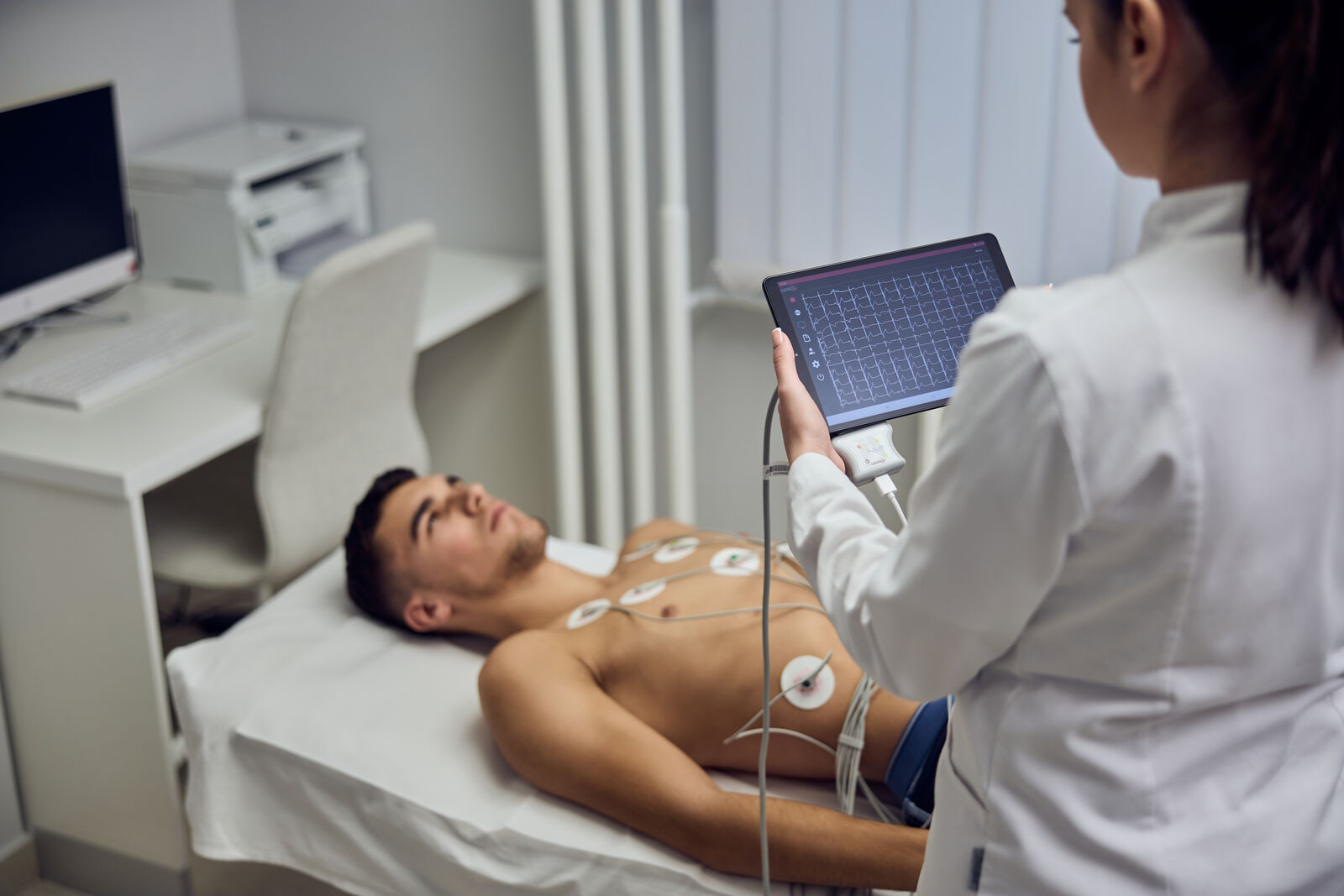
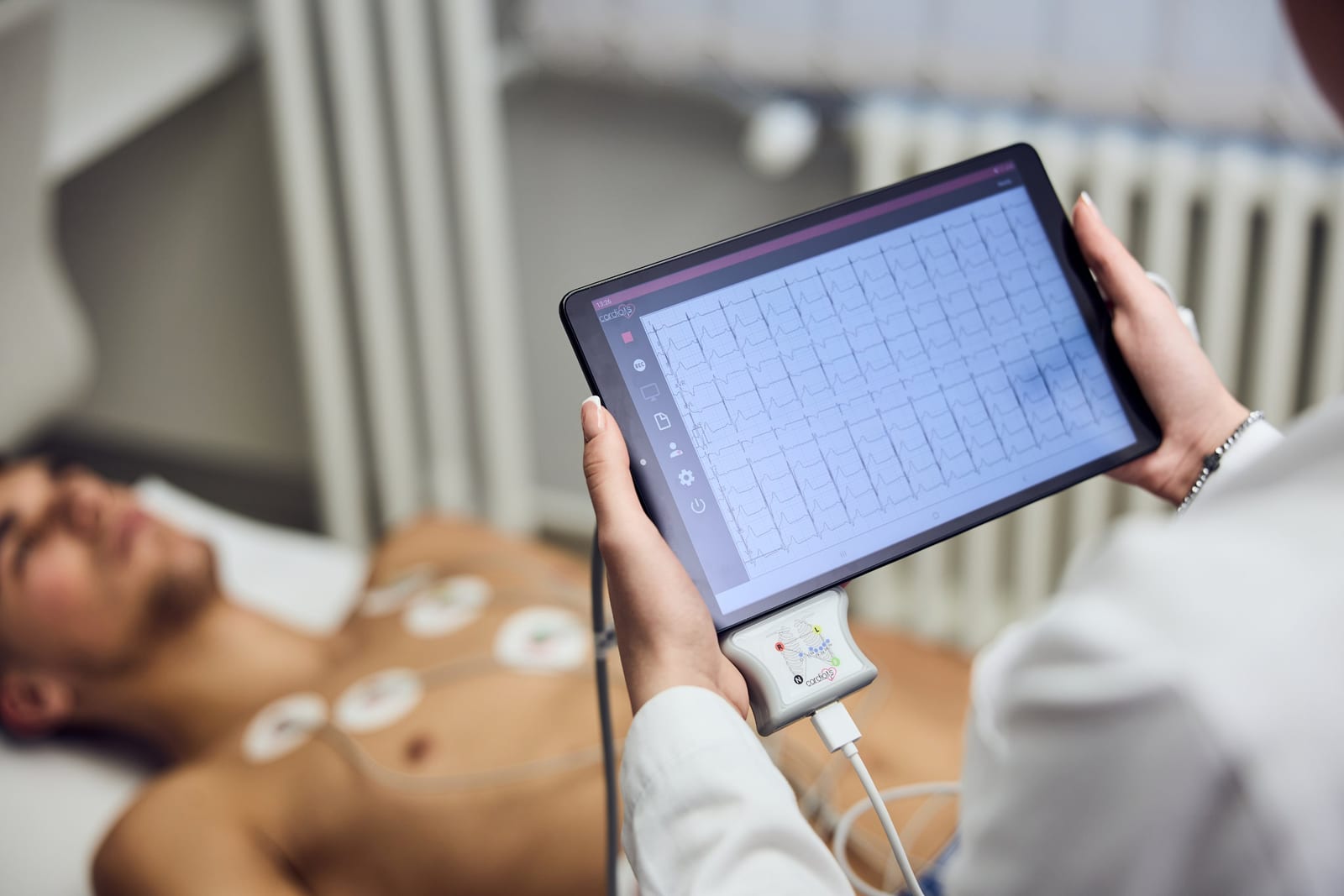
- ECG
- Vital-sign monitors
- Patient telemetry
- Ambulatory and home monitoring solutions.
-
Therapy & Drug Delivery
- Treatment controllers
- Transdermal delivery
- Dosing support and patient-operated therapeutic devices.
-
Portable & Wearable Devices
- Low-power sensing
- Mobile-connected peripherals and compact medical measurement equipment.
-
Clinical Equipment & Instruments
- Operator consoles
- Electromechanical systems
- Sensor-enabled devices and embedded HMI platforms.
ENGINEERING LIFECYCLE
Engineering
delivery lifecycle.
From intended-use analysis to field support — a disciplined lifecycle that connects requirements, risk controls, implementation and verification.
-
01
Discover & assess
Intended-use analysis, feasibility, risk considerations, architecture and development plan.
-
02
Design & prototype
System/software architecture, proof of concept, interface specifications and prototype.
-
03
Build & integrate
Firmware, device drivers, HMI/apps, connectivity, integration and CI pipelines.
-
04
Verify & prepare
Traceability, unit/integration/system testing, defect resolution and technical evidence.
-
05
Evolve & maintain
Product improvements, platform upgrades, cybersecurity maintenance and field support.
EMBEDDED PLATFORMS
Embedded platforms & power-aware design.
- MICROCONTROLLERS & SOCS
- ARM Cortex-M/A class, STM32, Nordic nRF, ESP32 and other suitable MCU/SoC families; platform selection by device requirements
- OPERATING ENVIRONMENTS
- Bare-metal firmware, FreeRTOS/Zephyr-class RTOS, embedded Linux, Windows IoT and application processors
- BATTERY-POWERED PRODUCTS
- Low-power modes, duty cycling, wake/sleep scheduling, power profiling, charging-state integration and energy-aware connectivity
- REAL-TIME & RELIABLE OPERATION
- Interrupts, concurrency, timing, watchdogs, fault handling, diagnostics and deterministic acquisition/control
- DEVICE LIFECYCLE
- Secure boot/update architecture, configuration management, logging, service diagnostics and maintainable release pipelines
CONNECTIVITY & INTEROPERABILITY
Communication, sensing & interoperability.
- ON-BOARD INTERFACES
- I2C, SPI, UART, GPIO, ADC/DAC, PWM, CAN and sensor/actuator interfaces
- WIRED CONNECTIVITY
- USB, USB OTG, Ethernet, serial links and device-to-host communication
- WIRELESS CONNECTIVITY
- Bluetooth Low Energy, Wi-Fi, NFC and cellular connectivity where product needs justify them
- SIGNAL & MEASUREMENT
- ECG and other biosignals, temperature, pressure, motion and optical sensor classes; filtering and data visualization
- SYSTEM INTEROPERABILITY
- Device APIs, application/cloud interfaces, data export, secure telemetry and relevant healthcare exchange patterns
QUALITY & STANDARDS
Regulated product development & quality engineering.
Medical device engineering requires a disciplined lifecycle connecting intended use, software requirements, risk controls, implementation and verification. Panonit supports customer quality and regulatory teams with engineering documentation, integration testing, test automation and technical evidence for conformity activities.
- IEC 62304
- Medical device software lifecycle processes and software maintenance.
- ISO 14971
- Risk management, hazard analysis and risk-control verification.
- IEC 60601 series
- Safety and essential performance of medical electrical equipment.
- IEC 62366-1
- Usability engineering and use-related risk considerations.
- ISO 13485
- Quality-management framework and design/development controls.
- IEC 81001-5-1
- Health software cybersecurity lifecycle activities.
- EU MDR / EU IVDR; FDA context
- Technical documentation, design controls and market-specific regulatory support.
WHY PANONIT
Why MedTech teams
choose us.
-
Cross-layer delivery
Engineering spanning device firmware, communication, application software and system integration.
-
Domain-focused engineering
Medical device expertise across diagnostic, monitoring and therapeutic products, with attention to safety, usability and regulated development.
-
Regulated engineering mindset
Development practices that accommodate traceability, risk controls and verification.
-
Flexible product teams
Specialists integrated into customer teams or multidisciplinary teams owning defined engineering work packages.
-
Practical innovation
Experience supporting differentiated medical concepts and commercially deployed clinical products.
ENGAGEMENT MODELS
Flexible ways
to work together.
-
Device feasibility & architecture assessment
2–6 weeks. Architecture options, technical risks, platform recommendation, prototype plan and delivery roadmap.
-
Device software development / modernization
Typically 3–9+ months, scoped by complexity. Firmware, applications, integration, verification deliverables or modernization of an established platform.
-
Dedicated MedTech engineering team
Ongoing engagement. Embedded, desktop/mobile, systems integration and quality engineering specialists integrated into the customer lifecycle.





Developing or modernizing a medical device? Let’s talk.
Tell us about your product — a senior engineer with medical-device experience will get back to you within one business day.